
Well-insulated homes are often perceived as having lots of insulation in the walls and attic while foundation insulation is overlooked. Poorly insulated foundations can account for up to one third of the heat loss in today’s homes. Insulating a foundation can dramatically and cost-effectively reduce utility bills and improve the comfort of living areas. Foundation insulation needs to perform underground against soil pressure; wet and cold conditions can compromise insulating properties.
XPS products’ long-term thermal performance (LTTR), water resistance and crush resistance make it the ideal foundation insulation.
Slab-On-Grade
Slab-on-grade foundations are low-cost options when a basement or crawl space is not utilized. Slab-on-grade foundations can transmit heat into and out of the home. In addition, they are susceptible to capillary action and condensation. Insulation at slab edges and under slabs can help reduce both energy loss and moisture problems.
Frost Protected Shallow Foundations
The use of Frost Protected Shallow Foundations (FPSF) is a construction technique which allows foundations to be built without extending below the frost line. Typically, foundation footings are required to extend below the frost line to prevent freezing temperatures below the footings so that frost heave does not damage the foundation. Section R403.3 of the 2021 International Residential Code describes a foundation that extends as little as 16” below grade anywhere in the U.S. Since FPSF require much less excavation and less concrete than typical footings, they can save thousands of dollars per home in cold climates.
Full Basements
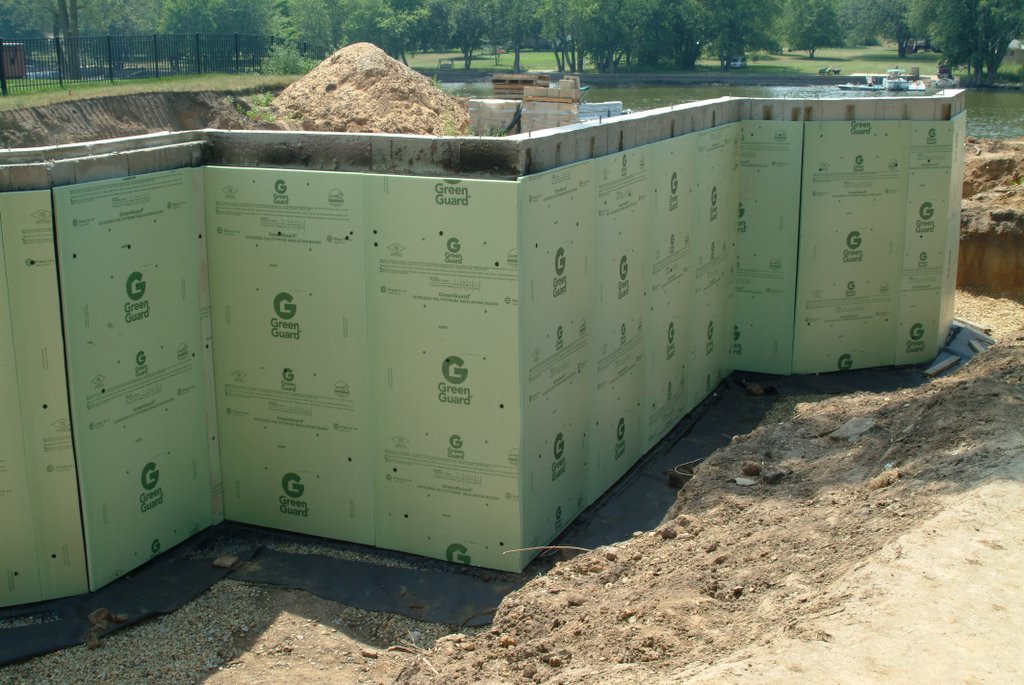
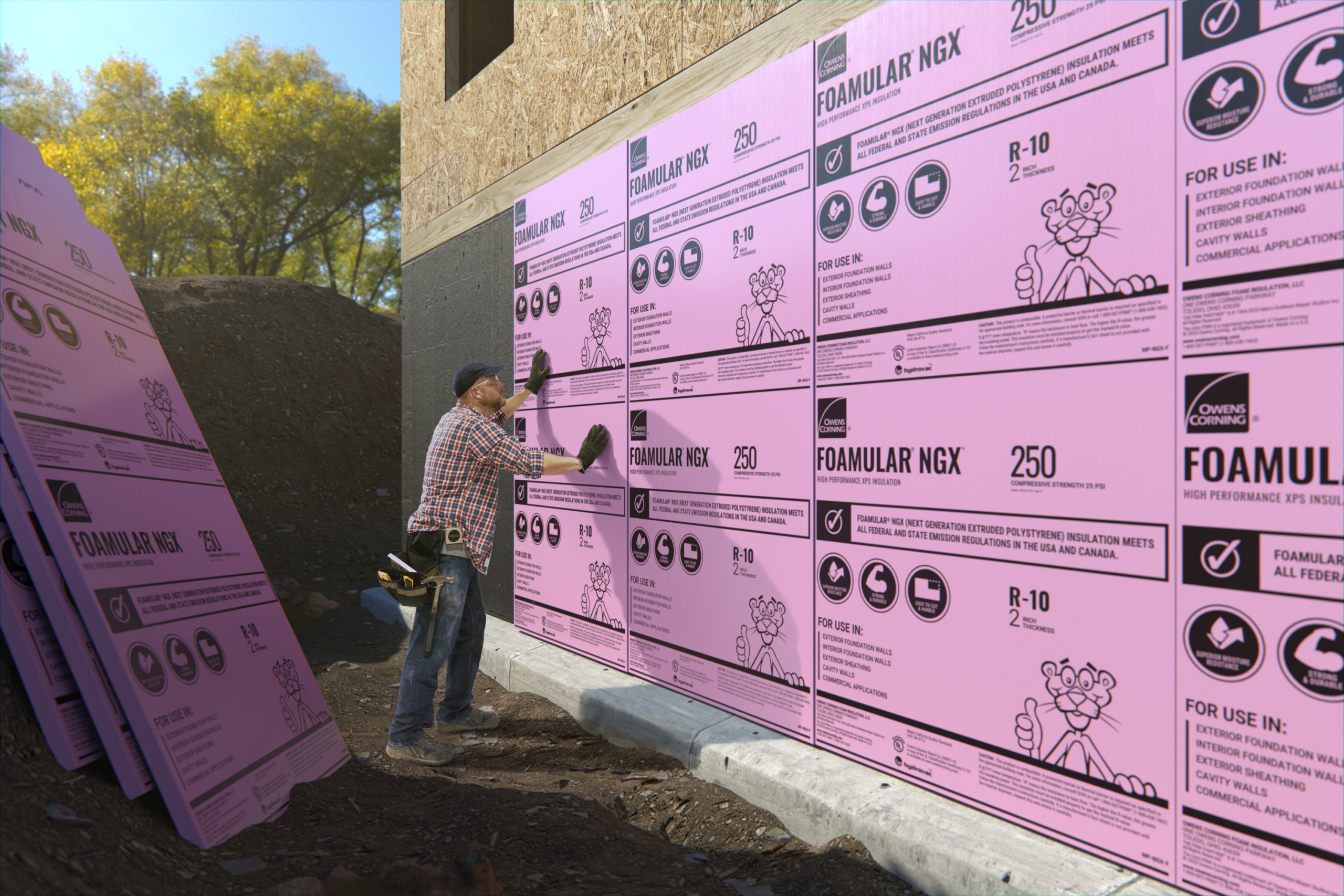
Improperly insulated basements can be damp, cool, musty places. Properly constructed and insulated basements are generally warmer, dryer, and can create more inviting living spaces. A foot of concrete has an insulating value of about R-1, or about the same insulating value as a single pane of glass. Basement walls can allow up to one third of the heat loss for an entire house to escape. In addition to reduced utility bills, insulated basement walls are less likely to “sweat” due to condensation; less moisture means less potential for mold growth. Basements can be insulated with XPS on the exterior of the basement wall during construction or on the interior of the basement wall any time after construction. In most cases, building fire codes require XPS to be separated from occupied spaces with a 15-minute thermal barrier, such as half-inch gypsum board. See the XPS manufacturer’s research report and the International Code Council for further details. Insulating under the basement slab can reduce condensation “sweating” of the slab. Remember, XPS is the best choice for long-term insulating performance underground due to its combination of high insulating value, superior resistance to moisture absorption and crush resistance.
Crawl Spaces
Crawl spaces can be dirty, damp, and smelly, but properly constructed crawl spaces can be dry, clean, and energy efficient. Crawl spaces should be constructed like a mini-basement: impermeable covering such as polyethylene on the ground and XPS insulation on the interior of the crawl space walls.
For houses built on a crawl space foundation, extruded polystyrene rigid foam can be used to complete the insulating envelope when installed on the interior face of the crawl space walls. Its “closed-cell” structure not only provides excellent thermal performance but also gives XPS long-term resistance to water absorption – attributes which make it particularly effective in this application.
Some XPS products have undergone evaluation by building code agencies, allowing XPS to be left exposed on crawl space walls provided certain criteria are met. For more information on these criteria, please see the XPS manufacturer’s research report and the International Code Council.
Termites
Foam plastic insulation can be used in “slight to moderate to heavy” termite infestation areas. See section R318.4 of the 2021 International Residential Code (IRC) for limitations in “very heavy” infestation areas.